



How to Set Up ESD Protection at Home for PCB Soldering
Author Dmitrii KhramtsovPosted 02 April 2026
Updated 02 April 2026
A single static discharge can destroy a microchip worth hundreds of dollars. And most of the time you won’t even notice when the failure happens. How to build a proper ESD protection setup at home — almost the same as what is used in electronics manufacturing?
In one of my previous articles Static Electricity in Electronics Manufactory I explained what static electricity is and how it appears. I will continue this topic and together with you we will build ESD protection against static electricity at home workplace, where we solder and repairing electronics.
How ESD Protection Works
The main idea of protection against static electricity is simple — creating a unified space with the same electrical potential, where any static charge that appears slowly flows to ground through an Electrostatic Discharge grounding system - ESD. The key word is slowly, without a spark. Charge generation around us and on our bodies happens constantly. If we do not eliminate static electricity in the working area, that will lead to sparks and damage PCB components.
In this diagram I have drawn the main components of protection that we will build today:
- A verified building grounding bus connected to our ESD system through ESD plug.
- ESD plug with 1 MegaOhm resistros inside.
- Grounded ESD outlet for gloves and a wrist strap
- Grounded table.
- Grounded equipment.
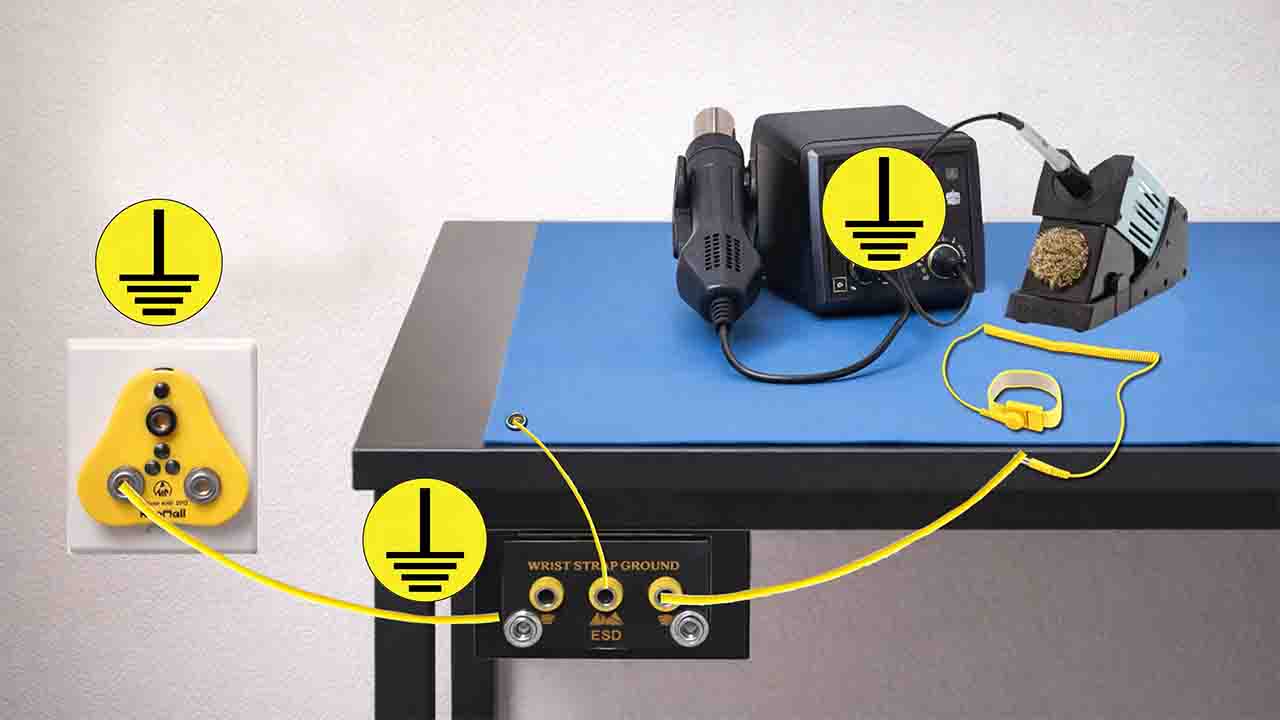
In electronic manufacturing ESD robe and special shoes are also used, but for home soldering a wrist strap and mat are usually enough.
Checking Grounding in the Power Outlet
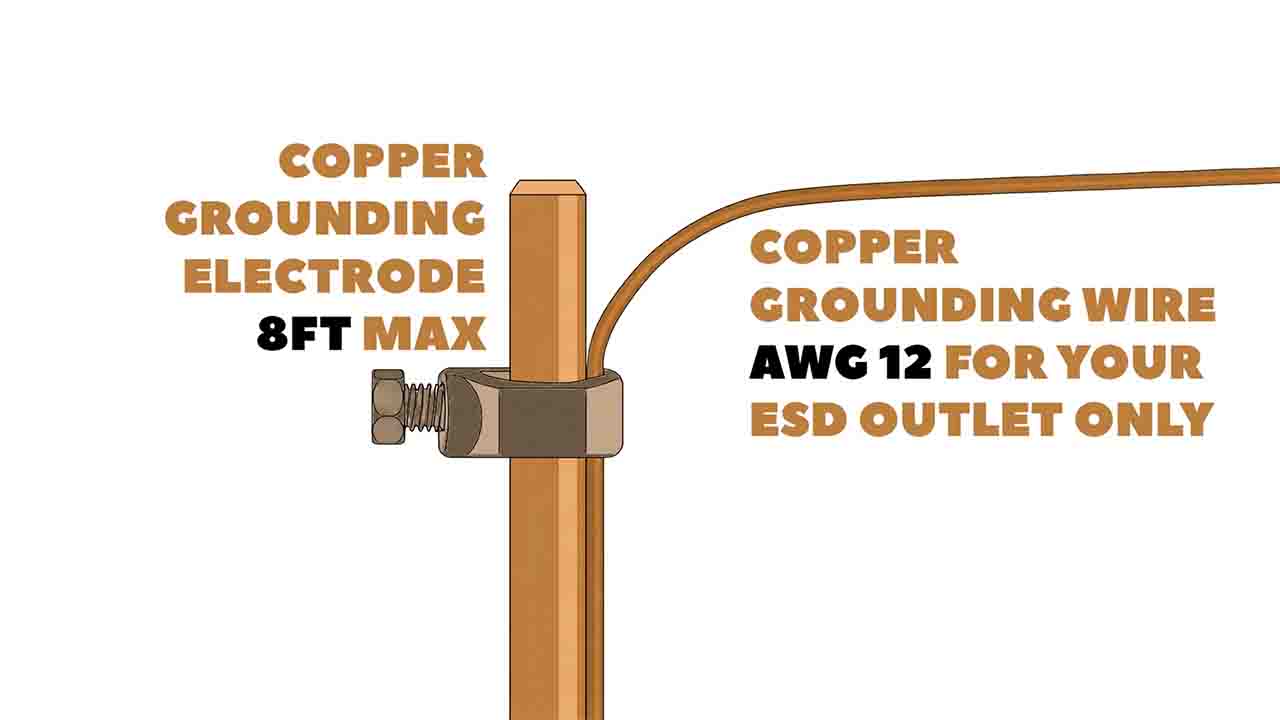
It is necessary to make sure that the grounding outlets in your house or apartment actually works and is not just present. If you are not confident in the reliability of the existing grounding in your private house, it may make sense to create your own grounding bus. In a private house you can install a separate grounding electrode outside, but its installation must comply with electrical regulations in your country. A copper wire with a cross-section of AWG 12 connects between outside electrode to the grounding contact of the nearest wall outlet, where you will connect your equipment — soldering station, oven, preheater, light and ESD outlet. The wire from the external electrode connects to the ground contact on only one outlet! Do not connect the entire house's grounding system to this outlet! This path is not easy for many people, but no one said it would be easy. I believe in you and your electrician friend!
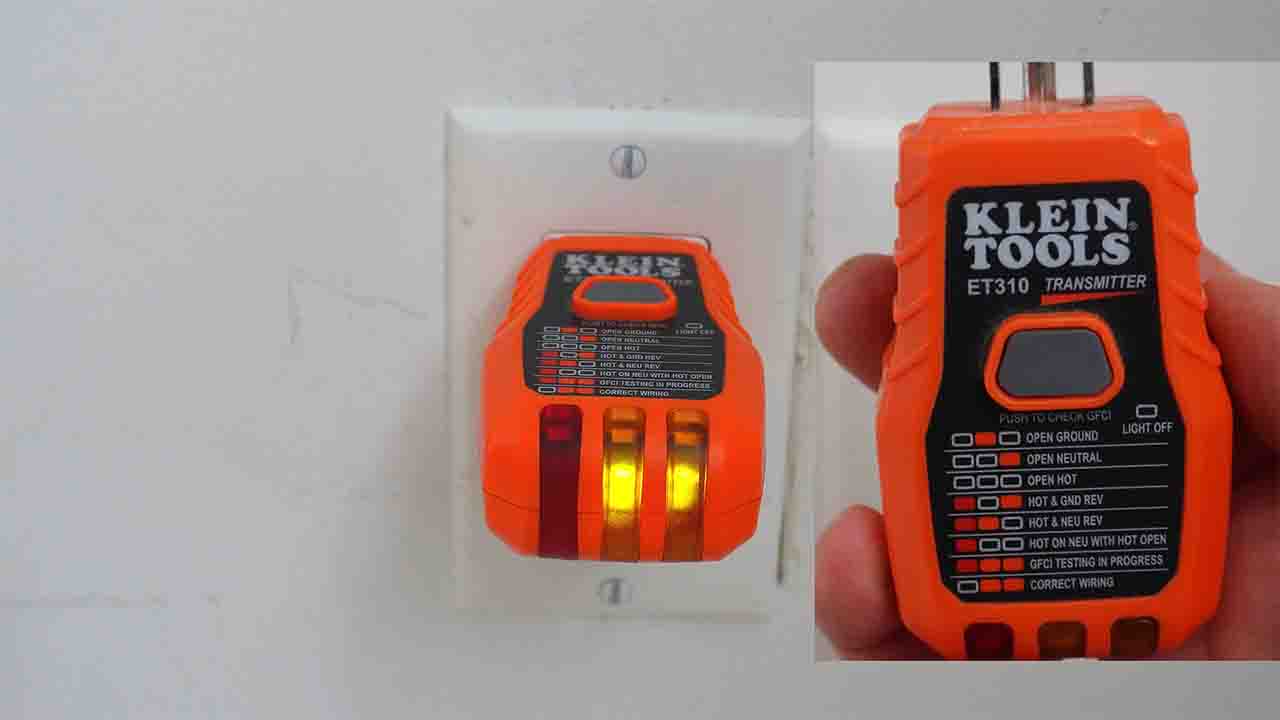
How do you check if grounding is present in apartment or house? If you plan to open the outlet — first - turn off the electricity breaker. If you do not understand how to do this, contact an electrician. For testing I use a circuit tester that can be found in any electrical store. I plug it into the outlet and see two orange indicators. I compare them with the table on the device. The right indicator shows the presence of the grounding bus in the outlet. The central indicator shows the correct wiring polarity — this is how it should be.
I will use this outlet to power my workplace, including all equipment and ESD protection circuit.
Connecting to the ESD Grounding System
Before starting assembly, I recommend buying the following stuff:
- ESD plug with a built-in 1 Megaohm resistors.
- ESD Wrist Strap Grounding Kit.
- ESD Grounding Cable with banana jacks.
- ESD outlet for installing to the table.
- ESD mat.
When purchasing, check the connectors to ensure that all connections fit together properly.
The 1 MΩ resistors installed in each line was not placed there by chance. Resistors limits the discharge current. Because of this, the charge flows away slowly and safely — without a spark and without the risk of PCB damaging.

ESD Work Table Setup
Work table can be made from different materials. They are usually metal, but at home you can also use a wooden table. A wooden table does not need to be grounded. However, do not use plastic tables because plastic is a good generator of static charges — exactly what we are trying to delete.
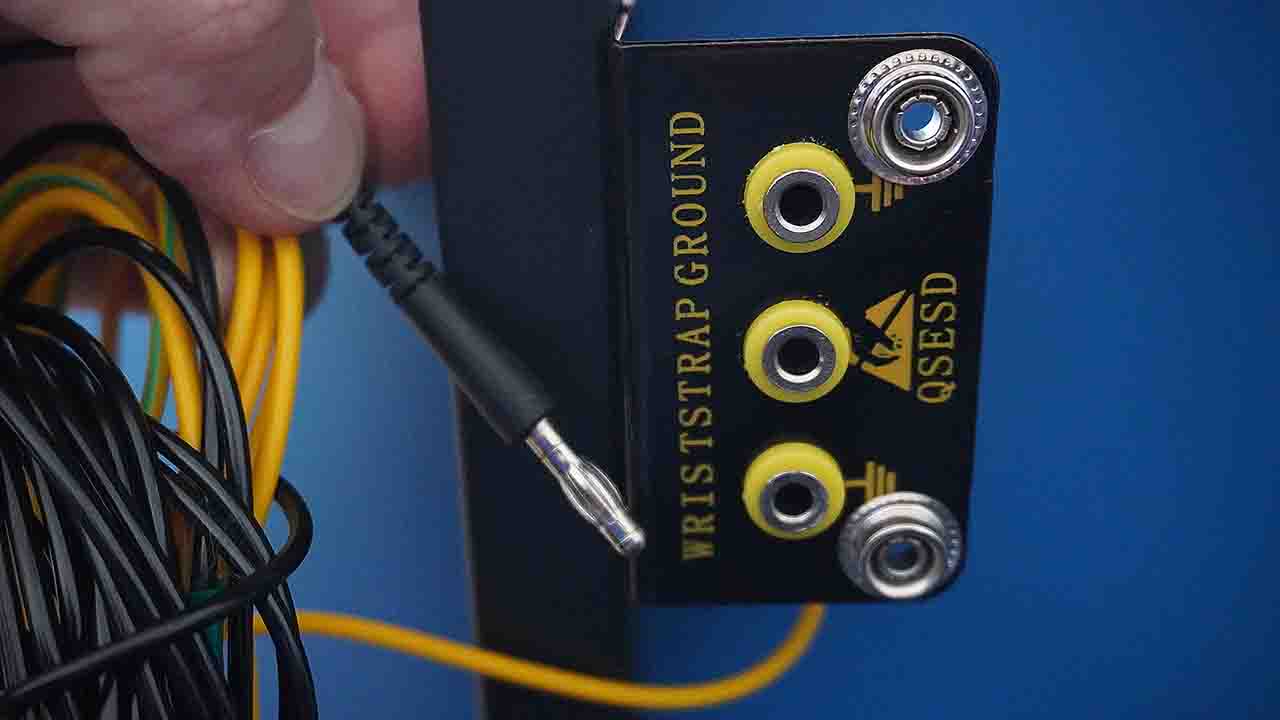
I screwed the ESD outlet to the metal leg of the table using two screws. I will connect the ESD wrist strap and the ESD mat to this ESD outlet.
To ground the metal table, I fastened a stranded copper wire under a bolt located on the underside of the tabletop. Connect this wire with a banana jack to an ESD outlet.
ESD Mat — The Foundation of the Workplace
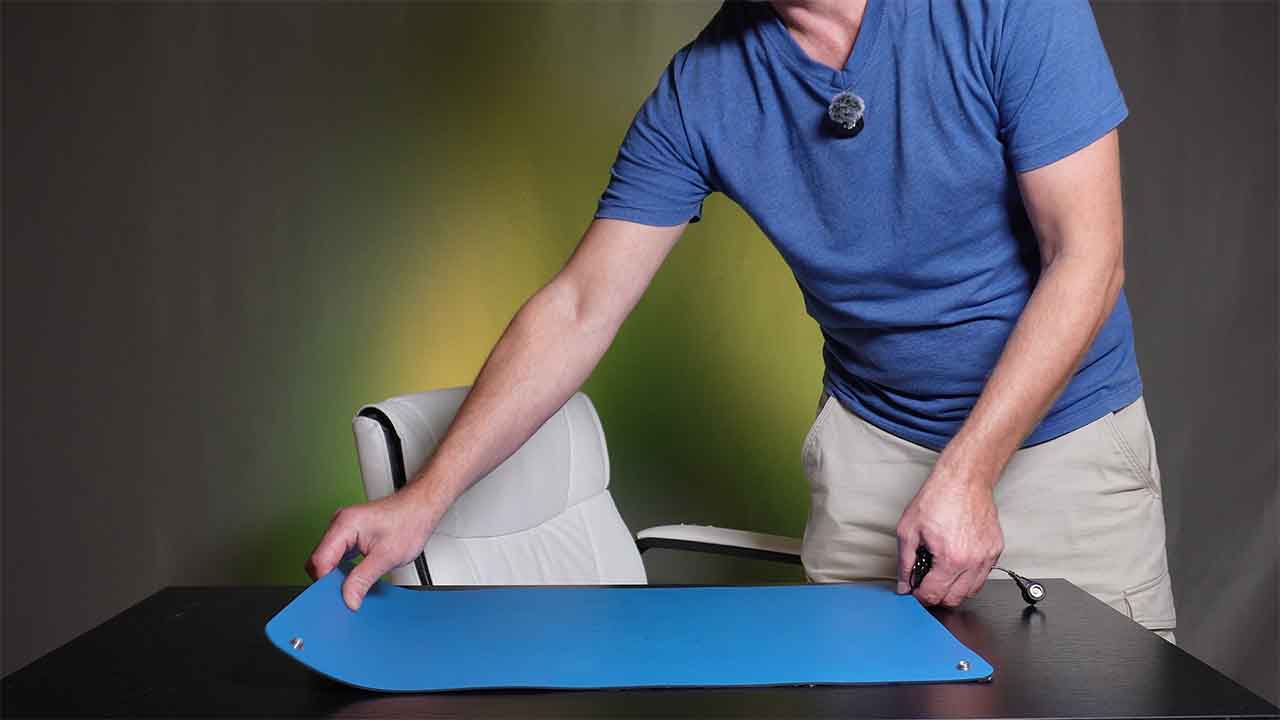
The foundation of the workplace is the ESD mat on which all manipulations with printed circuit boards take place. This is not just a rubber mat. It is made from materials with a specific electrical resistance so that any charge appearing on the mat slowly flows to the grounding bus through the outlets. I also connect the mat to the ESD outlet on the table.
ESD Wrist Strap — Body Grounding
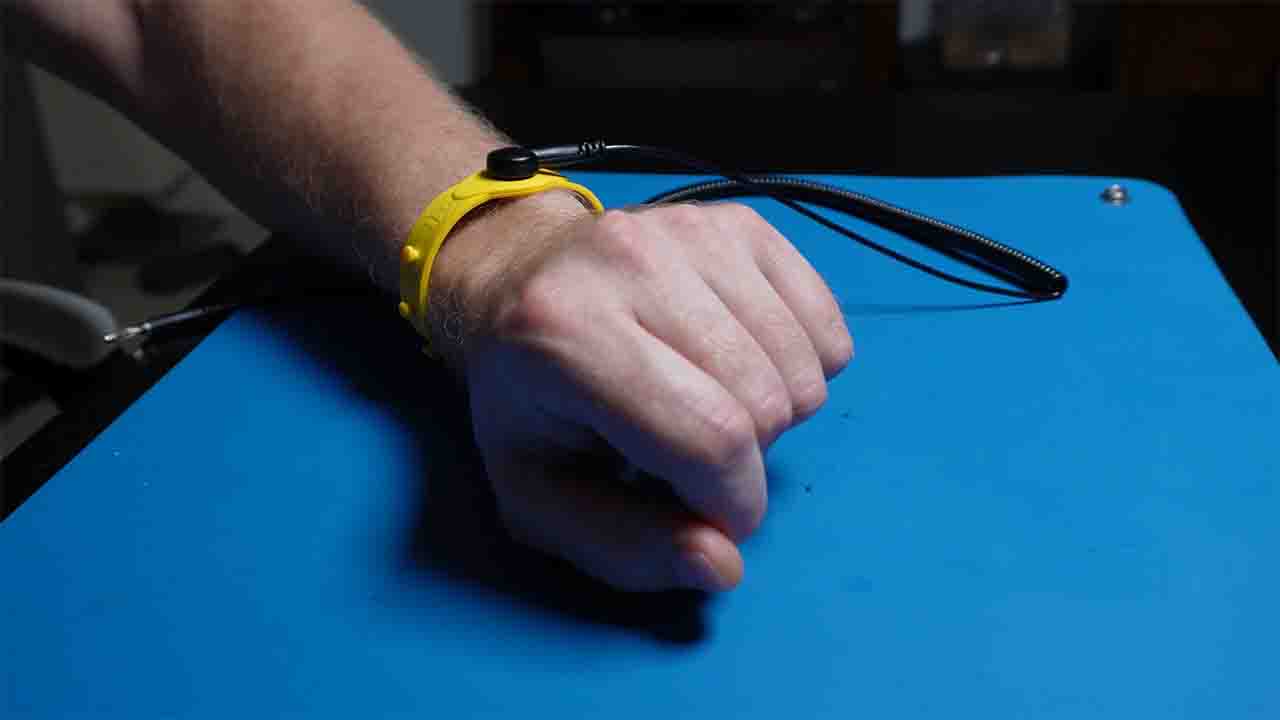
Before starting work I always put on an ESD wrist strap and connect it to the ESD outlet under the table. The wrist strap provides electrical connection between the human body and the grounding system. The human body is always in motion and generates charges through friction, which must be removed in real time.
ESD Gloves and Clothing
ESD gloves perform two functions. They protect components and the printed circuit board from hands grease contamination and prevent the direct spark transfer from the hand to the PCB.

Antistatic gloves, caps and robe contain very thin metallic threads sewn into the fabric. These threads allow newly generated charges to flow along the surface to a grounding point. These grounding points are the ESD wrist strap and ESD shoes. In production facilities even the floor is antistatic, and charges also flow to ground through the floor.
Regular clothing, especially synthetic fabrics, can generate a large amount of static charges. Therefore wool and synthetic materials are better avoided to reduce friction and the generation of static charges on the surfaces.
ESD Shoes
The sole of ESD shoes is made from electrically conductive materials. When a person stands on an ESD floor in a manufactory, any charge flows from the body through the shoes into the floor, and finally into ground. This way a person continuously discharges while moving.
ESD Heel Straps
Sometimes instead of special shoes people use ESD straps. They are attached or worn on regular shoes. One part of the strap goes inside the shoe and touches the person’s foot. The other part touches the floor under the sole. In this way a conductive path is created to remove charges.
Why ESD Protection Must Be a Complete System
Protection from static charges is a complete system. If even one element is missing, the protection may be ineffective.
For example:
- An ESD wrist strap without connection to ground is useless, even if someone says otherwise. It is hard to argue with physics.
- An ESD mat without grounding is also useless.
- Equipment for soldering that is not grounded can cause a discharge through the soldering iron tip while you are soldering.
Therefore, everything must be connected to a grounding point of the workplace. Equipment is grounded through the built-in ground in the regular power outlet, while mats, tables, and wrist straps are connected to ground through 1 Megaohm resistors inside ESD plug.
Humidity and Temperature in ESD Protection
For home use we have created a reasonably good ESD system. I also want to add that humidity and air temperature are extremely important, especially in manufacturing.
Dry air, especially in cold regions, does not conduct electrical charges. As a result, charge accumulation zones appear throughout the room, on objects and equipment. To prevent charge accumulation the air must contain moisture, which acts as a carrier of electrical charges.
Humidifying the air to about 50% and maintaining air temperature of around 21°C or 70°F allows static charges to flow to ground through any grounded objects. This creates an even safer environment.
Conclusion — ESD Protection System at Home
ESD protection is not just a wrist strap and a mat. It is a complete system where every element performs its function. Only when everything is connected correctly can static charges safely flow to ground. This is exactly how electronic components are protected in electronic manufactories and your table. And now you also know how to create such a system at home with a minimal budget.
Thank you for reading!
Watch video ESD Protection Setup for Home Soldering